
Build a Valley Grande Parcel-to-Permit Trail
Ownership in Valley Grande is a county question. The city keeps no duplicate of the recorder or assessor files. Start in CaptureCAMA and pick the record year you need between 2020 and 2026. Pull the parcel, owner and value fields. Then carry that county result over to City Hall's building file to complete the trail.
- Search address, mailing address, owner, parcel or key and preserve municipality code 04 when shown.
- Take deed book/page and legal description to Probate for deeds, plats and restrictions.
- Read assessment class, exemptions and taxes for the chosen year.
- Use GIS Location, acreage, subdivision and section-township-range when the address misses.
- Ask City Hall for the permit package, inspections, floodplain certification and covenant copies.
The detailed Dallas County property search explains the county mechanics. What sets Valley Grande apart is matching owner, mailing address and official E-911 address across city and county files.
Two Custodians Complete a Valley Grande Search
Dallas County Probate holds the deeds, mortgages, liens and plats. County tax systems carry the parcel, municipality and value fields. Valley Grande's City Clerk and Building Permit Department handle applications, contractor licensing checks, inspections and the floodplain, septic and power-release steps.
Dallas County Land Records
Probate and tax offices hold the deed, plat, assessment and tax trail.
Valley Grande Building Records
5914 Alabama Highway 22
Valley Grande, AL 36701
334-872-0104
The 2003 Municipality Retained Summerfield Clues
Valley Grande is a young city. Its official history places the first community concerns in late 2002. A January 9, 2003 vote went 9-1 for incorporation. Most of Summerfield then annexed voluntarily. This created a municipality of roughly 33.8 square miles with two commercial areas and a park and sports complex.
Old records mislead. An older deed, directory or newspaper may say Summerfield. A current card may say Valley Grande, or the mailing address may say Selma. Search both community names. Then reconcile the results with code 04, the map and the recorded legal description, because descriptive acreage is not an official boundary map.
Valley Grande Permit Records Bridge
A permit file carries what a deed does not. New construction in Valley Grande ties together FEMA certification, stamped plans, trade licenses, owner name and mailing address. It also includes the official E-911 address. A county septic permit and power-release steps complete it. The FEMA form asks for owner and project addresses, materials, cost and signature.
Cross-check the E-911 address. Match it against the CAMA Property Address, the GIS Location and the deed description. The city departments page is the public entry point.
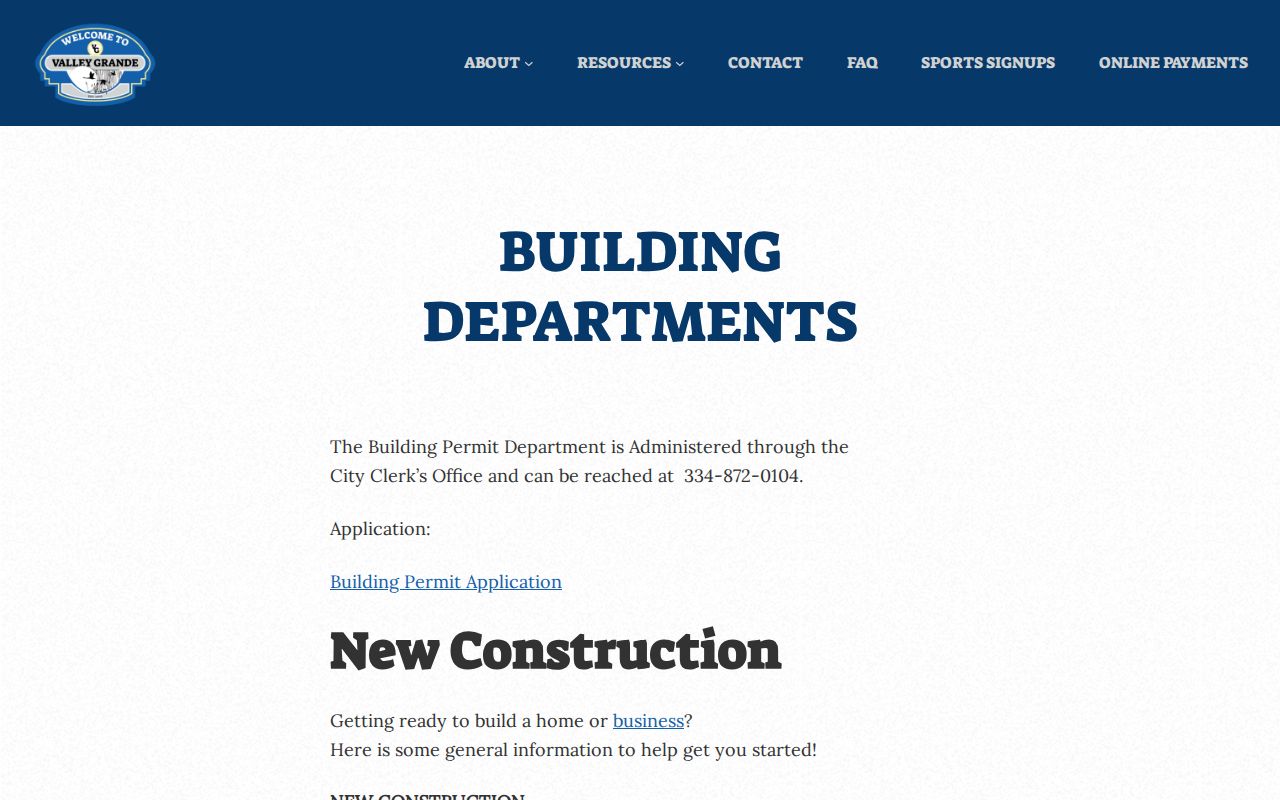
The captured municipal source complements, but never replaces, county title and parcel evidence.
Four Inspections Mark the Construction Timeline
Four inspections mark the construction timeline. Footings come first, before any concrete. Then slab or floor framing and under-floor plumbing. Rough electrical, HVAC and plumbing precede wall covering, and a final inspection grants occupancy. The general contractor pays the fee up front, though reinspection may cost more and premature work can draw penalties.
Mobile-home fees were listed at $750 for a double-wide and $500 for a single-wide, covering trade inspections plus E-911, FEMA, licensing, septic and payment records. Verify the current ordinance first. A contractor license or power release identifies project participants and timing, not the owner of record.
Valley Grande Limits Beyond Zoning
The city's FAQ says there is no zoning ordinance. Covenants may still bind the land. The FAQ warns about subdivision, developer or landowner restrictions and says City Hall may hold copies. Never read 'no zoning' as 'unrestricted'; floodplain rules, septic approval, codes and private restrictions can overlap, and the official FAQ makes the distinction visible.
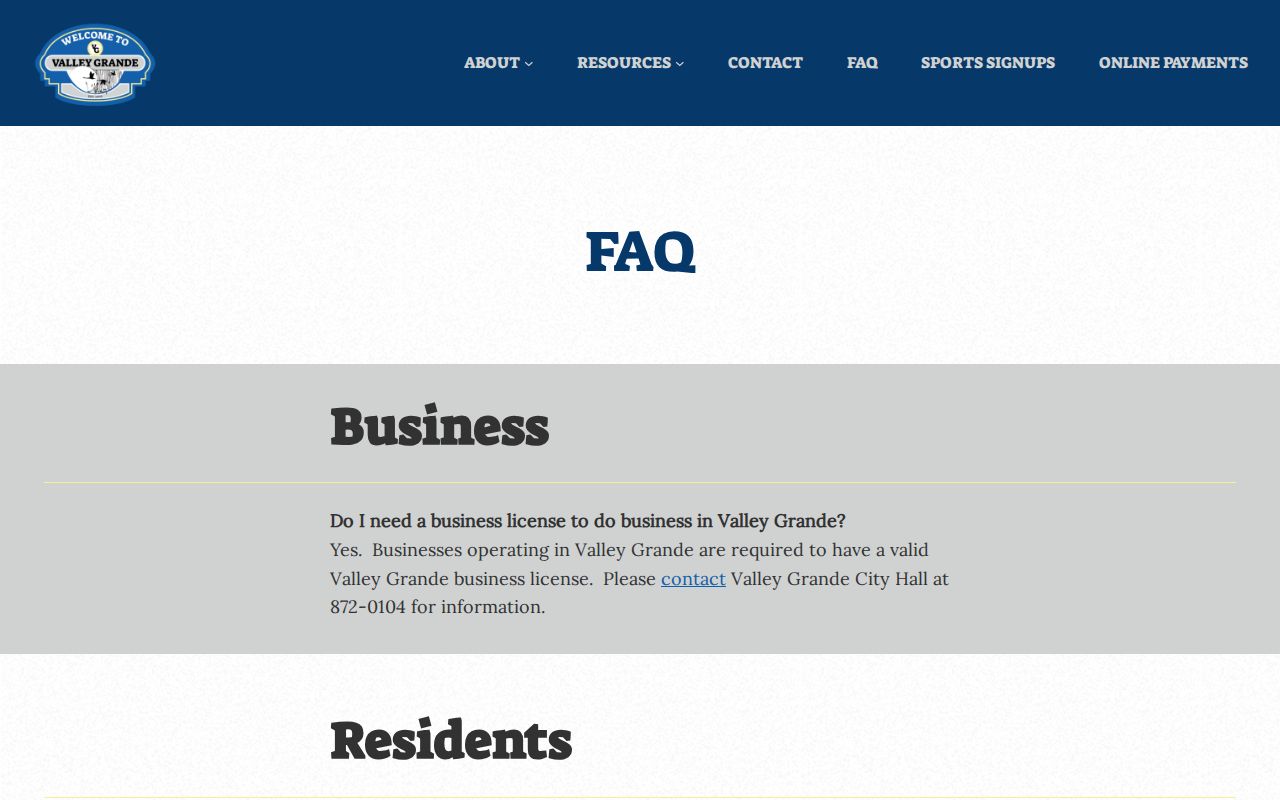
Confirm every covenant declaration and amendment in Dallas County Probate. A City Hall copy is only the lead, not the record of filing.
Valley Grande-Area Plat Names Require Verification
The county CRAAR map labels Valley View and Quail Ridge subdivisions. It does not place them inside the city limits. Wages and Anabel Hood are countywide names. They should not be assigned to Valley Grande without map and plat work. Summerfield stands apart as a documented predecessor community named in the city's own history.
| Neighborhood / Subdivision | Era | In the Records |
|---|---|---|
| Summerfield | Predates 2003 incorporation | Historic name; search Probate and Archives, then match the current parcel |
| Valley View | Not verified | County-map plat lead; confirm location and book/page |
| Quail Ridge | Not verified | County-map lead; do not claim city placement without review |
Test spellings in the GIS Subdivsn field. Before ordering a plat, save the instrument book and page, the deed date and the section-township-range; the parcel-map guide separates a viewer label from a surveyed boundary.
The Ordinance Shelf Supplies the Regulatory Dates
The city's ordinance shelf carries real dates. It lists a 2015 Subdivision Ordinance, 2018-88 New Building Permit Schedule, 2014-35 Flood Damage Prevention and a 2013-24 Building Code amendment, plus 2026-207 burial restrictions and 2026-208 Housing Code Abatement Board material. Read the operative ordinance, not the shelf. The effective date and its amendments decide whether a rule governed a given project, and a title alone cannot answer that. The full ordinance collection is public.
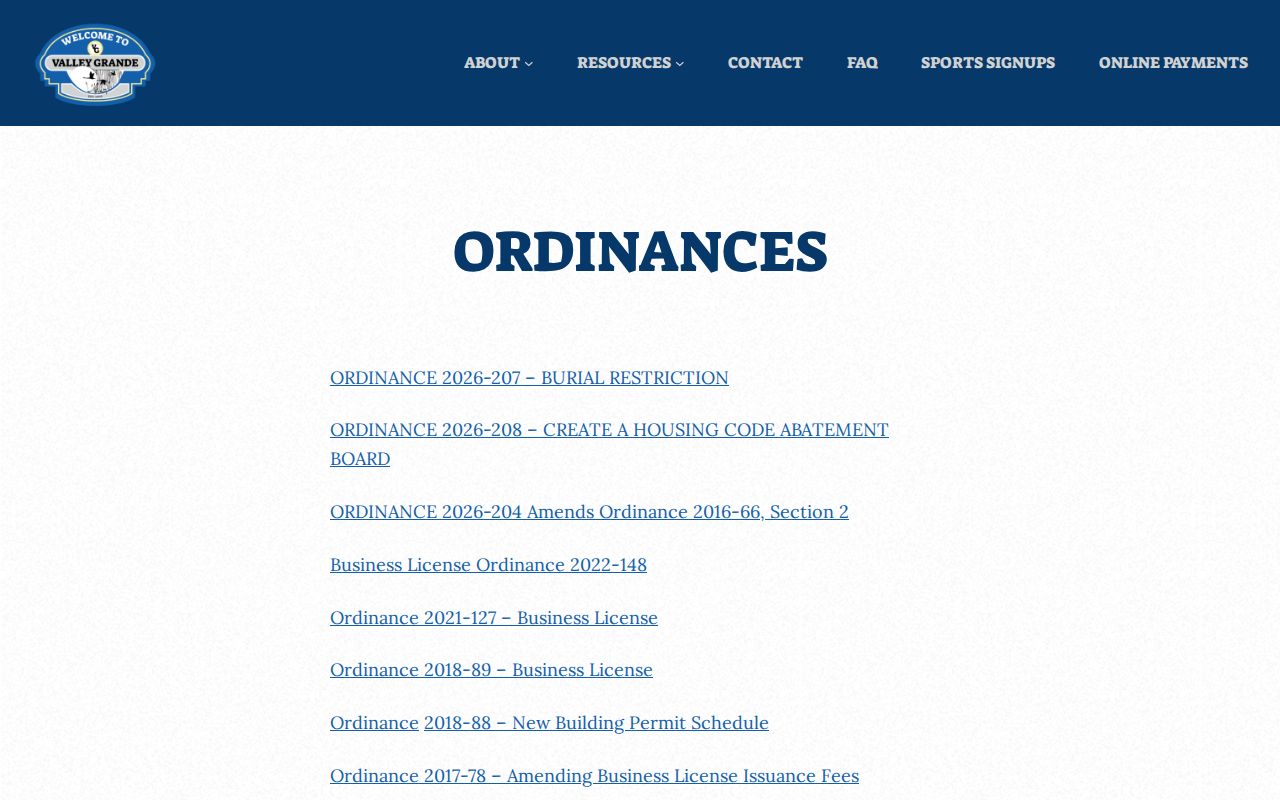
City ordinances add context; title remains county work.
Code 04 and the 34.1-Mill Context
The county table lists Valley Grande as code 4. Its municipal rate shows N/A. School millage is 11.5 and the total is 34.1. That equals $3.41 per hundred. Selma's row reads 57.5 and Orrville's 42.0. Those are tax-rate comparisons, not a city price ranking.
A tax bill depends on appraised value, class, assessed value and exemptions. Floodplain, septic, covenants, construction quality and permit history are separate due-diligence variables. The county publishes no neighborhood price series. Never infer appreciation from millage.
Valley Grande Publishes Permit Forms
Valley Grande posts permit instructions and application forms. However, the city offers no searchable index of issued permits by address, parcel or permit number. Nothing suggests coverage dates, an online payment gateway or export option either. The FAQ does give practical guidance. Complete applications generally clear in one to three days. Projects under $10,000 generally need no building permit at all. Licensing or inspection rules can still apply. So confirm the current scope before relying on any exemption.
For permit history, request files by owner name, mailing address, E-911 address, parcel number, project type and date. Ask for the application, inspection results, correction or stop-work notices, final disposition, and any floodplain or septic documents. The absence of an online lookup simply means the city publishes none.
Match Valley Grande Records Across Systems
A full property file in Dallas County can sit with five separate custodians, each on its own clock. CaptureCAMA gives the assessment year, municipality, owner, values and deed reference. Probate holds the recorded deed, plat and covenant instruments. County GIS adds mapped context and alternative rural search fields, while City Hall keeps the permit application and inspections. Floodplain, septic or utility records may answer to the city, the county or another agency entirely.
Build a concordance sheet before requesting anything. Write down the parcel and key number, owner name, mailing address, E-911 address and acreage. Add the legal description, subdivision spelling, section-township-range and deed book and page. Note the source and its as-of date beside each item. That discipline keeps a current permit address from being quietly paired with a stale assessment owner. It also guards against a Summerfield-era description.
For construction files, sequence matters. The application and fee receipt should predate the footing inspection. Correction and reinspection notices belong in the file along with final occupancy or utility release. A mismatch between owner and E-911 address can simply mean a newly assigned address, contractor paperwork or an intervening transfer. Check the deed recording date before assuming any single record is wrong.
Private restrictions call for different questions. Ask whether City Hall's copy is complete, whether amendments or releases exist, and which subdivision phase it covers. Match the legal description and plat reference to the parcel, then confirm the declaration at Probate. City staff can describe what they hold. Enforcing or interpreting a private covenant is not the same as municipal inspection authority.
Value comparisons need discipline too. Use the same assessment year, and keep market or appraised value separate from assessed and taxable value. Confirm the municipality code, class and exemption on each card. A lower millage rate can still yield a higher tax bill when the taxable base differs. Neither tax result establishes what a willing buyer would pay.
If City Hall refers part of an inquiry elsewhere, record the delegated agency, its file identifier and the exact scope. Septic approval, flood certification, utility release and trade inspection often live among several custodians. Matching those fragments by parcel, address and date builds an honest chronology. Valley Grande runs no single searchable permit database.
One last control is spelling. "Summerfield," "Valley Grande" and a Selma mailing city can all describe the same general area. But each label carries a different municipal meaning. Preserve each label, name its source and date. Then let the parcel number, mapped municipality and recorded description reconcile the property. That keeps city history useful. It does not turn a community name into boundary evidence it cannot support.
What Valley Grande Property Records Can Support
Valley Grande property records can tie an assessed owner and legal description to several sources. These include deeds, plats, taxes, permits, inspections, flood paperwork and possible covenants. The file is strongest when parcel number, municipality, E-911 address and dates agree across sources.
Limits still apply. A permit is not proof of title. A mailing city proves nothing about limits. A GIS line is not a survey. A tax rate is not a market valuation. When certainty matters, rely on recorded instruments, a survey and qualified professionals. Preserve document numbers, dates, parcel identifiers and the custodian name. This matters most when a construction file is split among City Hall, county health records and a utility.
Lawful use. Use Valley Grande property records for legitimate research, due diligence and civic transparency. Never use owner information to stalk, threaten or harass anyone.